
How much weight can you lose in a week?
The NHS and CDC both give 1 to 2 pounds a week. Here is where the first-week drop comes from, and why loss slows down later.
Water weight is the part of a day-to-day change on the scale that comes from water the body is holding, not from fat or muscle. Water makes up from about 75% of body weight in infants to about 55% in older adults, according to a 2010 review in Nutrition Reviews, and glycogen is stored with at least 3 grams of water per gram. Because that water moves in and out daily, one weigh-in says little and an average over weeks says more.
"Water weight" is not a medical term. It is the everyday name for the part of a change on the scale that comes from water the body is holding or letting go, rather than from fat or muscle. Water moves in and out every day, so one weigh-in says little on its own. Weigh-ins compared week against week say much more.
A 2010 review in Nutrition Reviews by Popkin, D'Anci and Rosenberg puts water at about 75% of body weight in infants and about 55% in older adults.
What it cannot tell you. The review gives a range across ages, not a figure for any one person. Your own share depends on your age and build, and the review does not set out how it varies with body fat.
Glycogen is the form in which the body stores carbohydrate. It is stored with water attached, so when glycogen goes up or down, the water goes with it.
The 2015 muscle biopsy study. Fernández-Elías and colleagues at the University of Castilla-La Mancha, publishing in the European Journal of Applied Physiology, tested the figure of 3 grams of water per gram of glycogen directly. Nine trained cyclists rode for 150 minutes in the heat, then ate 250 grams of carbohydrate, with muscle samples taken at the start and at the end. For each gram of glycogen rebuilt, at least 3 grams of water was stored in the muscle. When the cyclists also drank enough to replace their sweat losses, the ratio was higher, which the authors put down to extra water not bound to glycogen.
The 1992 diet study. Kreitzman, Coxon and Szaz, in a short report in the American Journal of Clinical Nutrition, describe glycogen as stored in the liver, muscles and fat cells with three to four parts water. They measured 11 people after 4 days on a very-low-calorie diet and discussed how this water-laden glycogen makes early weight loss look larger than it is, and regain look larger when carbohydrate is eaten again.
What they cannot tell you. Nine trained cyclists and 11 dieters are small groups. Neither study tells you how many kilograms of water any one person will gain or lose from a change in what they eat. What both support is the direction: a drop in stored carbohydrate shows on the scale partly as water, and so does refilling it.
Two controlled studies from the German Aerospace Center's metabolic ward, led by Heer, show that salt and body water are not linked in a simple straight line.
What they cannot tell you. Both were small, men only, and run under ward conditions unlike ordinary life. Read together, they suggest the jump from a low-salt to a normal-salt intake can move body water, while extra salt beyond that may not.
The National Health Service (NHS) does list eating too much salty food as one cause of swollen ankles, feet and legs, which is covered further down.
A 2011 study in Obstetrics and Gynecology International by White, Hitchcock, Vigna and Prior followed 62 healthy women for a year, covering 765 menstrual cycles. Each day the women rated how much "fluid retention" (bloating) they felt on a 0 to 4 scale.
Scores peaked on the first day of the period, were lowest in the middle of the first half of the cycle, and rose gradually around ovulation. Levels of the hormones estradiol and progesterone were not significantly linked to the scores.
What it cannot tell you. The women reported how bloated they felt. The study did not weigh them, so it does not say how many kilograms, if any, the scale moves across a cycle. It does give a reason to compare weigh-ins at the same point in the cycle, rather than one week against the next.
Two studies of people weighing themselves at home measured the rhythm.
2014, Obesity Facts. Orsama and colleagues at VTT Technical Research Centre of Finland analysed 4,657 morning weigh-ins from 80 adults, taken on waking and before breakfast. Weight was highest on Sunday and Monday, fell through the week, and began rising again on Saturday. The authors concluded that weight differences between weekends and weekdays should be seen as normal, not as signs of weight gain.
2020, PLoS One. Turicchi and colleagues used remotely monitored body weight from 1,421 adults in the NoHoW weight loss maintenance trial, run across several European countries. Weight moved by 0.35% within the week, higher after the weekend and lower towards its end. For someone weighing 80 kg, 0.35% is about 0.3 kg. Over Christmas, weight rose by an average of 1.35%.
What they cannot tell you. Neither study split the weekly swing into water, food in the gut and body tissue. Both describe group averages, so your own swing may be larger or smaller.
A single weigh-in mixes body tissue with whatever water, stored carbohydrate and food you happen to be carrying that morning. A few things make the number easier to read:
The total daily energy expenditure (TDEE) calculator works the same way: it says to judge its estimate against how weight changes over three or four weeks, not over a day. The body mass index (BMI) calculator gives a result from whatever weight you enter, so a weekly average gives a steadier BMI than a single morning.
The NHS page on oedema (swollen ankles, feet and legs), last reviewed in February 2026, describes the signs as swollen or puffy ankles, feet or legs, shiny or stretched skin, and skin that stays dented after you press it.
The NHS says to see a general practitioner (GP) if both ankles, feet or legs are swollen and the swelling has not improved after a few days or is getting worse, or if you have a known condition affecting your heart, kidneys or leg veins.
It says to ask for an urgent GP appointment or call NHS 111 if, among other things:
It says to call 999 if swelling comes with shortness of breath, chest tightness, heaviness or pain, coughing up blood, a racing heartbeat, or feeling lightheaded, faint, confused, sick or clammy, because these can be signs of a blood clot in the lungs. Outside the UK, use your local emergency number.
Water weight is the everyday name for changes on the scale caused by water the body holds or releases, rather than by fat or muscle. A 2010 review in Nutrition Reviews puts water at about 55% to 75% of body weight depending on age, so small shifts in it move the scale from day to day.
Not in a simple way. In a 2009 study of 9 men, raising salt from a low to a normal intake raised extracellular fluid by about 2 litres, but raising it further did not. In a 2000 study of 32 men, high salt did not raise total body water or body mass.
A 2011 study of 62 women over 765 cycles found self-rated bloating peaked on the first day of the period. The women were not weighed, so the study cannot say how much the scale changes. Comparing weigh-ins taken at the same point in the cycle avoids mixing that effect into a trend.
The NHS says to see a GP if swelling in both legs, ankles or feet has not improved after a few days or is getting worse, and to get an urgent appointment if one leg is swollen without a clear cause or if swelling is sudden, severe, painful, red or hot. It says to call 999 if swelling comes with breathlessness or chest pain.
Every figure above comes from one of these. Check them.
The NHS and CDC both give 1 to 2 pounds a week. Here is where the first-week drop comes from, and why loss slows down later.
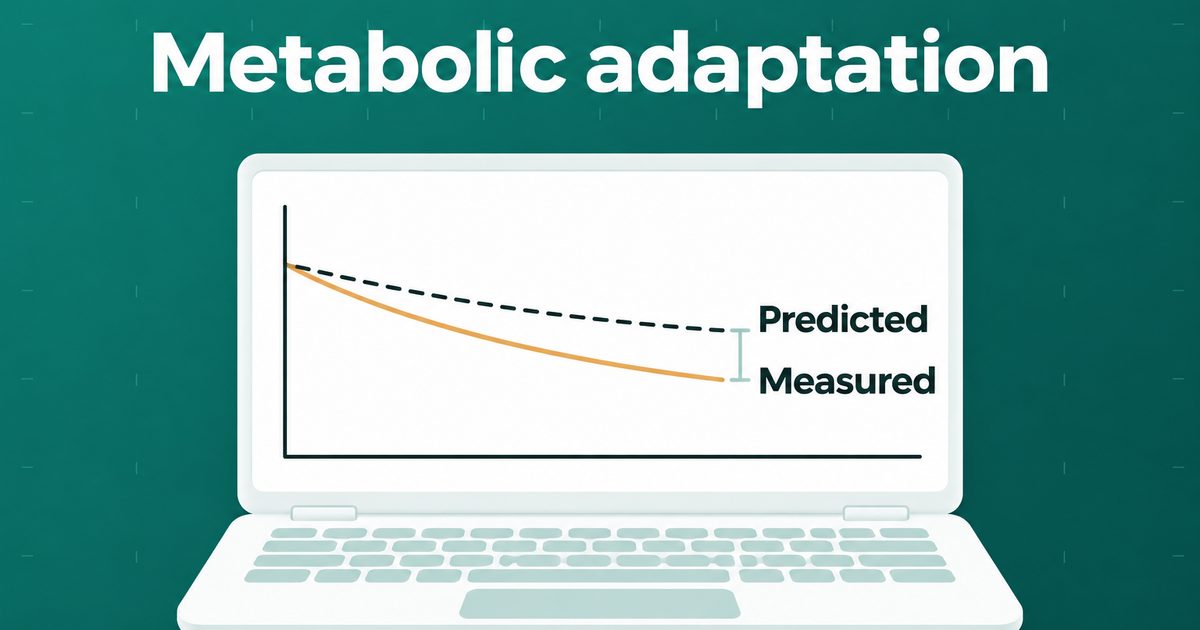
From a 1995 NEJM experiment to The Biggest Loser follow-up: what metabolic adaptation studies measured, and what they cannot tell you.
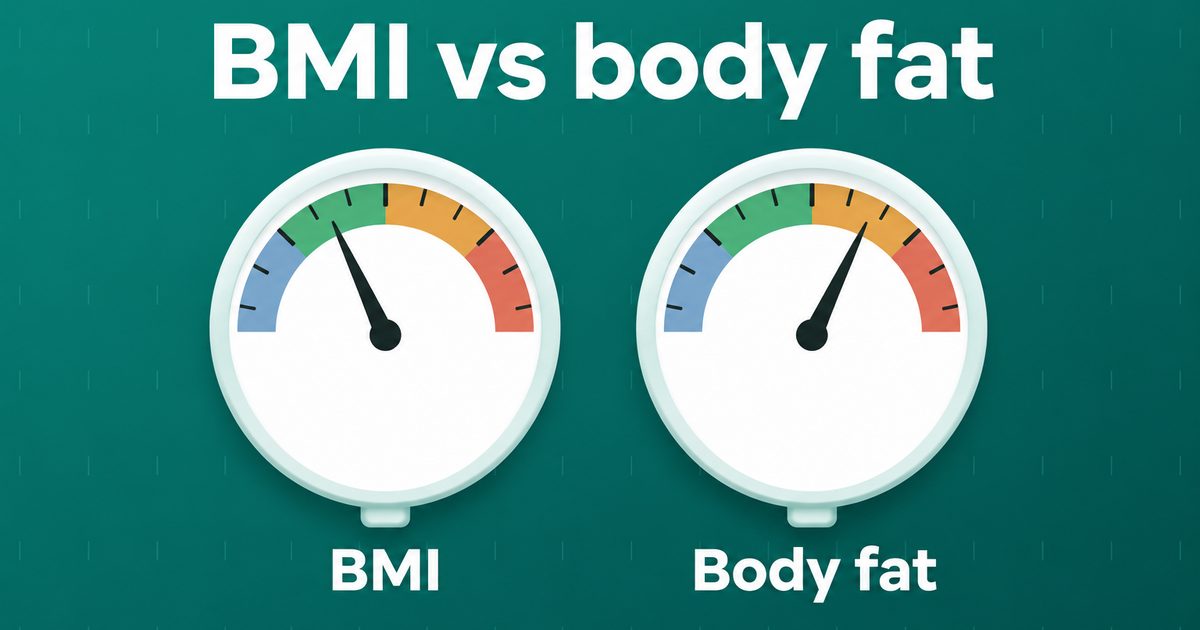
What BMI and body fat percentage each measure, and how often a BMI of 30 or over agrees with body fat measured in a lab.
The app runs body mass index (BMI), waist ratios and three body fat methods side by side, and tells you when they disagree about you.
Free, no account, and it works offline. 100,000+ downloads on Google Play.
This is not medical advice. Body Numbers is a calculator. It does not diagnose, treat or monitor any condition, and no number it produces should replace a conversation with a doctor or a dietitian. If a result worries you, or if you are pregnant, unwell, or under eighteen, speak to a health professional.
 Scan to install