
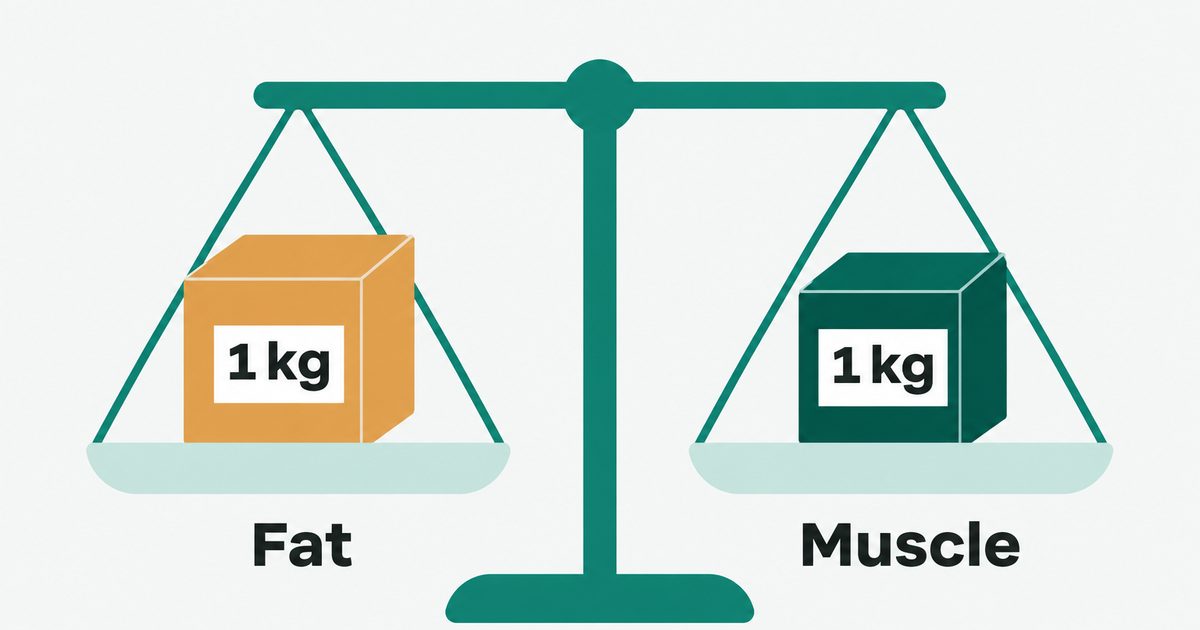
Does muscle weigh more than fat?
A kilo is a kilo. The real difference is density: the same weight of muscle takes less room than fat. Here are the figures and where they come from.
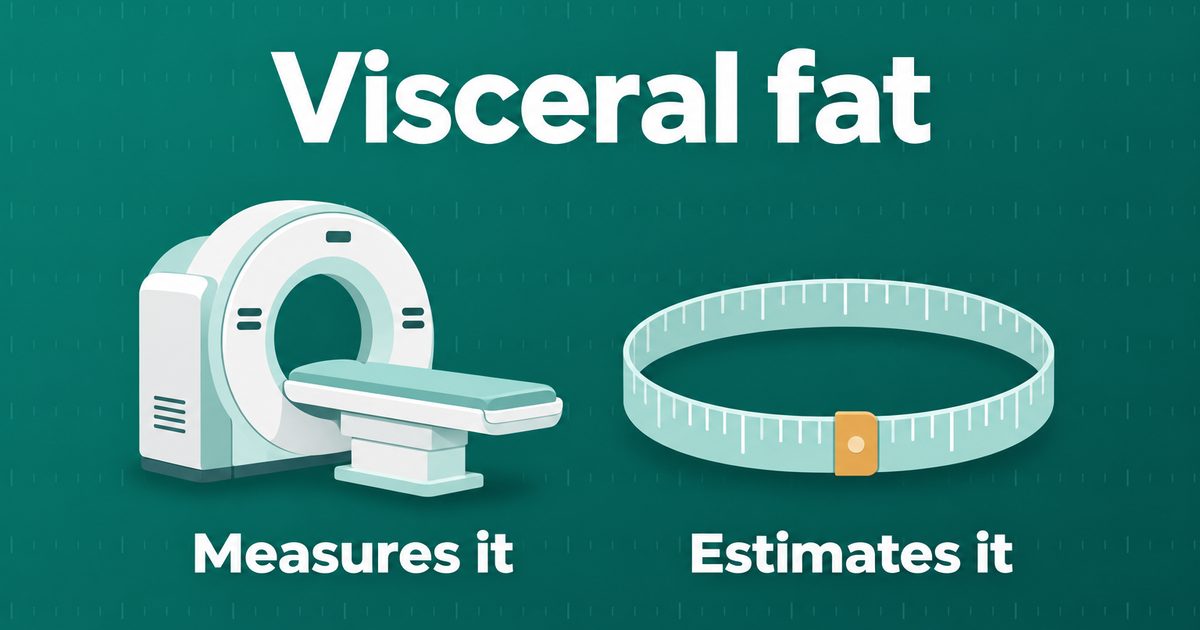
Subcutaneous fat sits under the skin. Visceral fat sits inside the abdomen, around the organs. In the Framingham Heart Study, computed tomography (CT) scans of 3,001 adults found both linked to blood pressure, blood sugar and blood fats, but visceral fat more strongly, and it still added information after body mass index (BMI) and waist size were taken into account. Only a CT or magnetic resonance imaging (MRI) scan measures visceral fat directly; a waist measurement is an indirect stand-in.
Body fat is stored in more than one place, and the place matters. The two stores people search about are subcutaneous fat, the layer under the skin, and visceral fat, which sits inside the abdomen around the organs. A 2012 review in the British Journal of Radiology by Shuster and colleagues describes visceral obesity as increased fat "surrounding the intra-abdominal organs".
Below: how each is measured, what the Framingham Heart Study CT scans linked them to, and what those studies cannot tell you.
| Subcutaneous fat | Visceral fat | |
|---|---|---|
| Where | Under the skin, all over the body, including the belly | Inside the abdomen, around the organs |
| Measured directly by | CT or MRI | CT or MRI |
| Seen by a tape measure? | Yes, a waist measurement includes it | Yes, a waist measurement includes it |
The last row is the reason this topic is confusing. A tape around the waist measures both stores together and cannot separate them. The Shuster review puts it this way: waist circumference is thought to reflect both visceral and subcutaneous fat, while hip circumference reflects subcutaneous fat only.
The same review reports that men have a higher percentage of visceral fat than women, and that the share of fat inside the abdomen rises with age.
The Shuster review calls CT and MRI "the gold standard" for measuring fat inside the abdomen. The review also lists their drawbacks: the radiation dose from CT makes repeated scans in long-term studies hard to justify, and MRI equipment is expensive and less available than CT.
A 2019 position statement from the International Atherosclerosis Society and the International Chair on Cardiometabolic Risk, led by Ian Neeland and published in The Lancet Diabetes & Endocrinology, describes visceral fat as "accurately measured by CT or MRI".
Dual-energy X-ray absorptiometry (DXA) is a body composition scan with a low X-ray dose. The Shuster review states that DXA cannot tell different fat deposits apart and can "only provide estimations" of visceral fat.
In the same year, Kaul and colleagues tested an automated DXA visceral fat method against CT in 124 adults aged 18 to 90, with BMIs from 18.5 to 40 (Obesity, 2012). The two measures agreed closely across the group (r² of 0.957). For individuals, the gap between DXA and CT ranged from about 355 cm³ below to 468 cm³ above. The study was funded by GE Healthcare, which makes the scanner used, and three of the authors were employees of the company or its affiliates.
So a DXA number for visceral fat is an estimate calibrated against CT, and how close it lands for one person can vary.
The same kind of scan is used as the yardstick for body fat equations, and what a dual-energy X-ray absorptiometry scan measures explains how its results shift between machine makers, with body thickness and with hydration.
A waist measurement needs only a tape. It is a proxy: it reflects visceral fat and subcutaneous fat together. In the Kaul study, the correlations between CT-checked visceral fat and BMI, waist circumference and waist-to-hip ratio "ranged from poor to modest".
A 2012 meta-analysis by Margaret Ashwell and colleagues in Obesity Reviews pooled 31 studies covering more than 300,000 adults in several ethnic groups. It compared how well BMI, waist circumference and waist-to-height ratio picked out adults with high blood pressure, type 2 diabetes, abnormal blood fats, metabolic syndrome and cardiovascular disease. Compared with BMI, waist circumference improved discrimination by 3% and waist-to-height ratio by 4 to 5%. Waist-to-height ratio did better than waist circumference for diabetes, high blood pressure, cardiovascular disease and all outcomes combined, in men and women.
That meta-analysis tested waist measures against health outcomes, not against scanned visceral fat. It supports waist-to-height ratio as a screening measure; it does not show that a tape can measure visceral fat itself.
You can work out your own numbers with the waist-to-height ratio calculator or the waist circumference calculator, which also explains where the widely quoted waist thresholds came from. Both are only as good as the tape position, so it is worth reading how to measure your waist first.
The Framingham Heart Study is a population study run from Framingham, Massachusetts, by the US National Heart, Lung and Blood Institute. Between 2002 and 2005, 3,001 participants without cardiovascular disease (48% women, average age 50) had abdominal CT scans that measured the volume of both fat stores. Caroline Fox and colleagues reported the results in Circulation in 2007.
What they found:
A follow-up by Britton and colleagues in the Journal of the American College of Cardiology (2013) tracked 3,086 Framingham participants with CT-measured fat for a median of 5 years. After adjusting for standard risk factors including BMI, each one standard deviation more visceral fat was linked to a 44% higher risk of cardiovascular disease and a 43% higher risk of cancer. Visceral fat was not linked to death from any cause over that period, and there were 71 deaths in total.
The Neeland position statement summarises 30 years of studies: visceral fat measured by CT or MRI is an independent risk marker for cardiovascular and metabolic disease and death.
The Body Roundness Index was published by Diana Thomas and colleagues in Obesity in 2013. They built it from a geometric model of the body and tested it against visceral fat measured by MRI. In their data, it "slightly improved" predictions of the percentage of visceral fat compared with BMI, waist circumference or hip circumference. It is still built from a tape measure and a height, so it is an estimate, not a scan.
Visceral fat is fat stored inside the abdomen, around the internal organs. The 2012 British Journal of Radiology review by Shuster and colleagues describes it as fat surrounding the intra-abdominal organs. Only CT or MRI measures it directly.
In the Framingham Heart Study CT analysis (Fox and colleagues, Circulation, 2007), both were linked to blood pressure, blood sugar, blood fats and metabolic syndrome, but visceral fat more strongly, and only visceral fat still added information after BMI and waist circumference were accounted for. That is a finding about groups of people, not a verdict on any one body.
Not directly. A waist measurement includes both visceral and subcutaneous fat and cannot separate them. In a 2012 Obesity study by Kaul and colleagues, waist circumference correlated only poorly to modestly with visceral fat measured by CT. A tape measure is useful as a screening proxy, which is how the 2012 Ashwell meta-analysis supports waist-to-height ratio.
It is an estimate. In the 2012 Kaul study of 124 adults, an automated DXA method agreed closely with CT across the group, but individual results differed from CT by up to several hundred cubic centimetres either way. That study was funded by the scanner's maker.
None of the studies cited on this page sets a healthy cut-off for visceral fat. The 2019 Neeland position statement notes that simple clinical tools for tracking visceral fat still need to be developed. For a number you can measure at home with a published band, waist-to-height ratio is the closer option, and a doctor can put any result in context.
Every figure above comes from one of these. Check them.
A kilo is a kilo. The real difference is density: the same weight of muscle takes less room than fat. Here are the figures and where they come from.
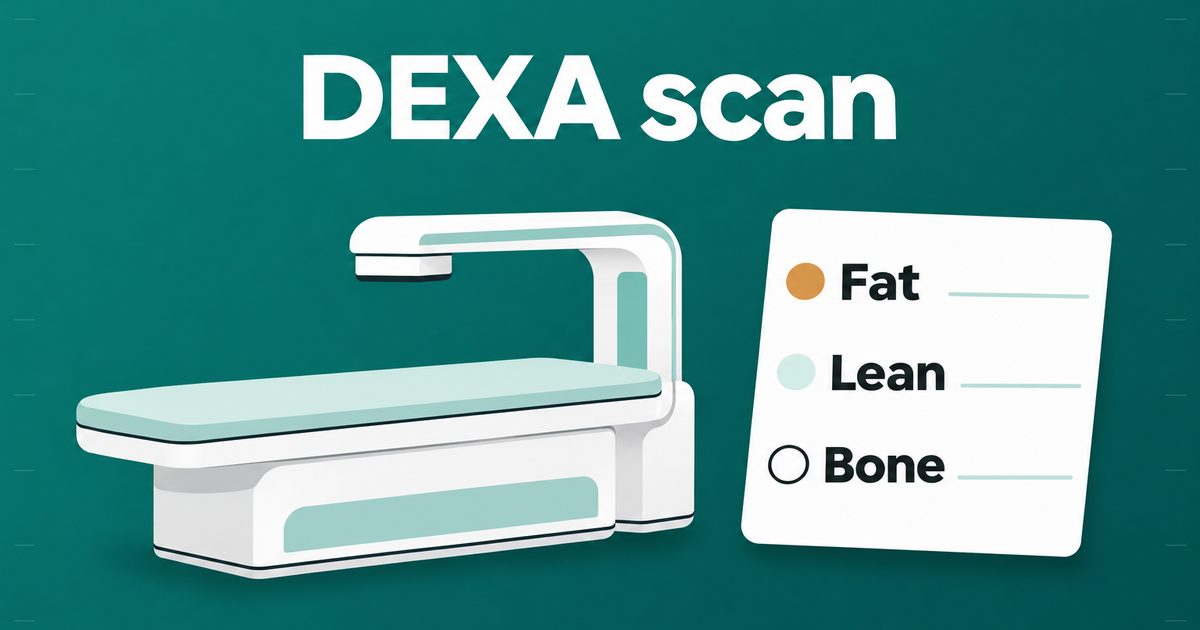
A DEXA scan splits your body into fat, lean tissue and bone, region by region. What it measures, where it drifts, and its dose.
A body fat scale measures resistance, then guesses fat with an equation you cannot see. What lab comparisons found, scale by scale.
The app runs body mass index (BMI), waist ratios and three body fat methods side by side, and tells you when they disagree about you.
Free, no account, and it works offline. 100,000+ downloads on Google Play.
This is not medical advice. Body Numbers is a calculator. It does not diagnose, treat or monitor any condition, and no number it produces should replace a conversation with a doctor or a dietitian. If a result worries you, or if you are pregnant, unwell, or under eighteen, speak to a health professional.
 Scan to install